ISO 9001
ISO 14001
IATF16949
ISO 9001
ISO 14001
IATF16949
May 26, 2026
In the manufacturing sector, challenges such as achieving precise specifications, minimizing material waste, and ensuring high production efficiency often plague engineers and manufacturers. The High Pressure Die Casting process emerges as a robust solution, enabling the creation of complex and detailed metal components at scale. For businesses faced with the frustration of dimensional inaccuracies or excessive scrap rates, die casting addresses these pain points directly. For instance, a local automotive parts manufacturer experienced a 25% reduction in production costs after switching to high pressure die casting, underscoring how transformative this technique can be when properly implemented.
To successfully implement the Die Casting process, several prerequisites are essential:
Here\'s a detailed guide to effective die casting:
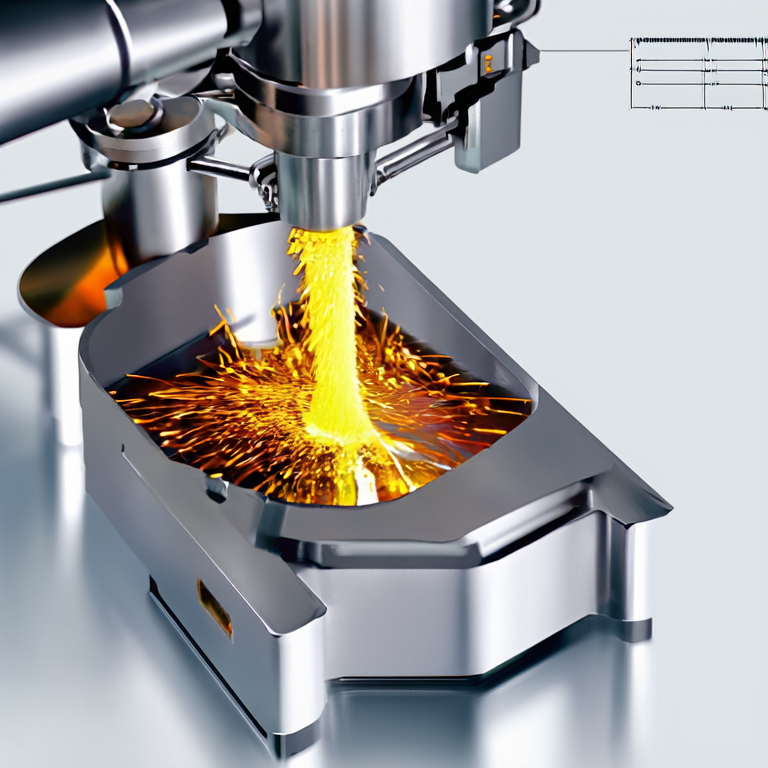
Even experienced manufacturers can encounter challenges during the die casting process. Here are common errors and how to resolve them:
The die casting process is a powerful manufacturing method that, when properly implemented, can significantly enhance production efficiency and product quality. By understanding and addressing common challenges, and by collaborating with experts like Yuhui, manufacturers can optimize their processes and reduce costs. Continuous training and equipment upgrades are also advisable to maintain competitive advantage in the market.
Q: How long does the die casting process take?
A: The entire die casting cycle, from injection to cooling, typically ranges from a few seconds to several minutes, depending on the complexity of the part.
Q: What materials are commonly used in die casting?
A: Common materials include aluminum, magnesium, zinc, and copper alloys, each chosen based on the application\'s specific requirements.
Q: How can I improve my die casting design?
A: Collaborate with experienced die casting engineers, utilize simulation software for mold flow analysis, and adopt best practices for design optimization.
Latest News

Aug. 10, 2026
Quality Control in Die Casting: IATF 16949, ISO 9001 & Precision Inspection
Quality control in precision die casting combines the foundational process framework of ISO 9001 with the rigorous, defect-prevention mandates of IATF 16949.
Read More
Aug. 10, 2026
Design Guidelines for Better Die Casting Results
Die casting is a widely-used manufacturing process in which molten metal is injected into a mold to create complex parts. To optimize outcomes, it is essential to adhere to specific design guidelines that enhance die casting results.
Read MoreSmall Molded Parts with in Days
Our complete CNC aluminum service will accompany your aluminum machining project from the prototype construction to the end aluminum parts manufacturing.
Get a Quote
Eight Processes

High-accuracy aluminum and zinc alloy parts produced with state-of-the-art die casting machines ranging from 88T to 2000T.
Read More
With machines from 88T to 2000T, we produce high-accuracy aluminum and zinc alloy parts efficiently.
Read More
Over 50 CNC machines, including 3-axis, 4-axis, and 5-axis, deliver precise and efficient machining for complex components.
Read More
A combination of manual and automated deburring techniques ensures smooth, defect-free surfaces for optimal performance.
Read More
Post-casting reshaping and alignment guarantee dimensional accuracy and structural integrity.
Read More
Comprehensive finishing solutions, including powder coating, spray painting, and UV coating, ensure superior durability and aesthetics.
Read More

Get in Touch
If you cannot find a suitable product, please leave a message or contact us. We have a dedicated technical team to serve you.