ISO 9001
ISO 14001
IATF16949
ISO 9001
ISO 14001
IATF16949
June 04, 2026
The differences between die casting and sand casting can significantly impact manufacturing processes. Zinc die casting is a popular choice due to its ability to produce detailed parts efficiently. On the other hand, sand casting offers flexibility and is often used for larger components. This article will delve into the key contrasts between these two methods. Understanding these differences will help you choose the most suitable casting technique for your needs.
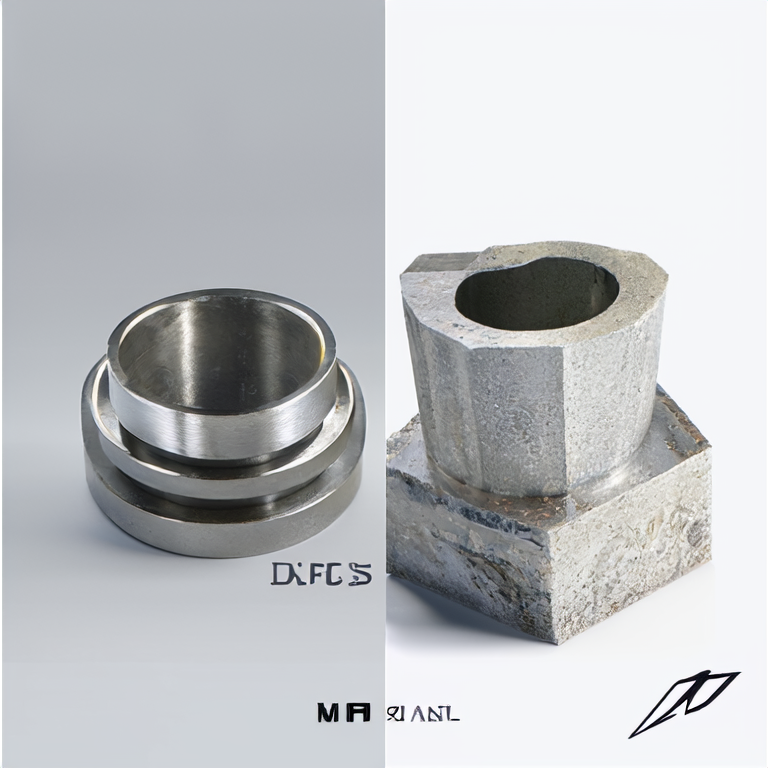
The main differences between die casting and sand casting are in the materials used, the manufacturing processes, and the applications. Die casting is faster and produces high-precision parts, while sand casting is more versatile and better for larger shapes.
Die casting typically uses non-ferrous metals like zinc, aluminum, and magnesium. These materials provide good mechanical properties and a smooth finish, making them ideal for intricate designs.
Sand casting primarily uses metal alloys, especially iron, aluminum, and brass. The process allows for a wider range of materials, which gives designers more options. However, the finish may not be as fine as with die casting.
The die casting process involves forcing molten metal into a mold under high pressure. This method ensures uniformity and reduces waste. The cycle time is short, typically ranging from a few seconds to a couple of minutes.
In sand casting, a mold is created using sand and a binding agent. After the mold is formed, molten metal is poured into it. This process is slower, typically taking hours from start to finish, depending on the part size and complexity.
Die casting is known for its high tolerance and detail. Parts produced can have complex geometries with smooth surfaces, making it ideal for components where precision is paramount.
Sand casting has lower precision levels. The surface finish can be rough, and minor adjustments are often needed after casting to meet exact specifications. This method is suitable for parts where minor imperfections are acceptable.
Die casting is more cost-effective for large production volumes. The initial investment for making the die is high, but the cost per unit decreases as the volume increases. It is economical for producing thousands of parts.
Sand casting is less economical for high volume production due to longer manufacturing time. However, it is cost-effective for small quantities and prototyping, as molds can be made quickly and adjusted as needed.
In conclusion, understanding the differences between die casting and sand casting is crucial for manufacturers. Zinc die casting offers speed and high precision, making it perfect for detailed parts. Conversely, sand casting provides versatility for larger shapes and lower quantities. Choose the method that best fits your project requirements.
1. What is die casting?
Die casting is a manufacturing process that forces molten metal into a mold to create precise parts.
2. What is sand casting?
Sand casting is a method where a mold is created from sand and molten metal is poured into it to form parts.
3. Which casting method is better for large products?
Sand casting is better for large products, while die casting is ideal for smaller, precise parts.
4. Can die casting produce complex shapes?
Yes, die casting can produce very complex shapes with high precision.
5. Is sand casting suitable for small production runs?
Yes, sand casting is suitable for small production runs and prototyping.
6. What are common applications for die casting?
Common applications for die casting include automotive parts, electronics, and household items.
Latest News

Aug. 10, 2026
Quality Control in Die Casting: IATF 16949, ISO 9001 & Precision Inspection
Quality control in precision die casting combines the foundational process framework of ISO 9001 with the rigorous, defect-prevention mandates of IATF 16949.
Read More
Aug. 10, 2026
Design Guidelines for Better Die Casting Results
Die casting is a widely-used manufacturing process in which molten metal is injected into a mold to create complex parts. To optimize outcomes, it is essential to adhere to specific design guidelines that enhance die casting results.
Read MoreSmall Molded Parts with in Days
Our complete CNC aluminum service will accompany your aluminum machining project from the prototype construction to the end aluminum parts manufacturing.
Get a Quote
Eight Processes

High-accuracy aluminum and zinc alloy parts produced with state-of-the-art die casting machines ranging from 88T to 2000T.
Read More
With machines from 88T to 2000T, we produce high-accuracy aluminum and zinc alloy parts efficiently.
Read More
Over 50 CNC machines, including 3-axis, 4-axis, and 5-axis, deliver precise and efficient machining for complex components.
Read More
A combination of manual and automated deburring techniques ensures smooth, defect-free surfaces for optimal performance.
Read More
Post-casting reshaping and alignment guarantee dimensional accuracy and structural integrity.
Read More
Comprehensive finishing solutions, including powder coating, spray painting, and UV coating, ensure superior durability and aesthetics.
Read More

Get in Touch
If you cannot find a suitable product, please leave a message or contact us. We have a dedicated technical team to serve you.