ISO 9001
ISO 14001
IATF16949
ISO 9001
ISO 14001
IATF16949
July 03, 2026
Die casting and injection molding are two popular manufacturing processes used to create metal and plastic parts. Each method has its benefits and drawbacks. Understanding the differences between die casting and injection molding can help companies choose the right solution for their products. Both processes involve melting materials and forming them into desired shapes. The Precision Die Casting Solution is especially valuable for industries where accuracy is crucial. The choice between these methods is often influenced by factors such as cost, production volume, and material selection.
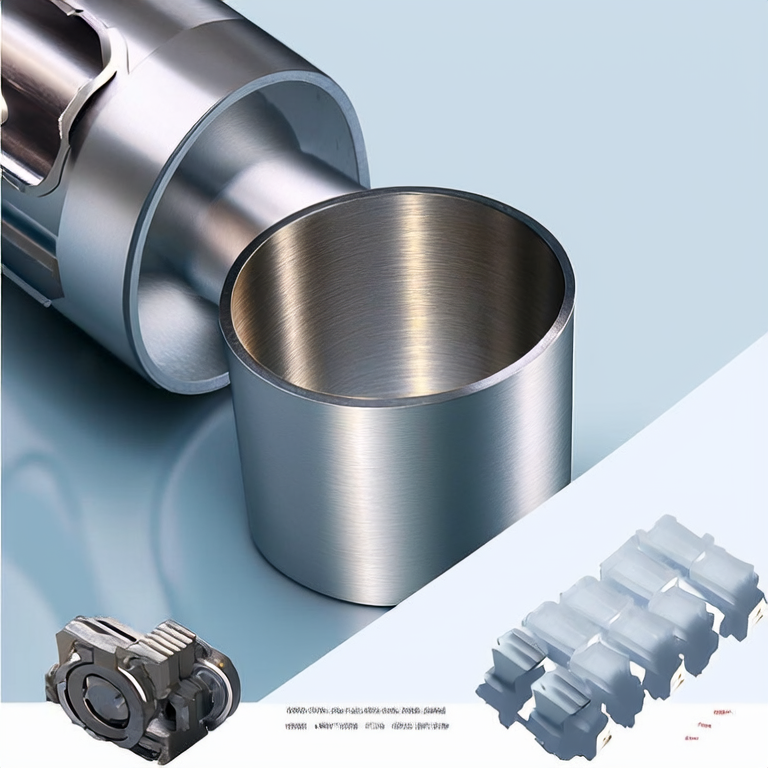
Die casting uses molten metal, while injection molding uses melted plastic. Die casting is ideal for high precision and durability, and injection molding is great for low-cost plastic parts.
Die casting typically uses metals like aluminum, zinc, and magnesium. Injection molding primarily uses plastic materials, such as polypropylene, PVC, and nylon.
Die casting can be more expensive due to higher initial tooling costs. However, it can be more cost-effective in large production runs. Injection molding, on the other hand, has lower setup costs, making it suitable for smaller production volumes.
Die casting provides faster production for large quantities since it can create thousands of parts quickly. Injection molding can be slower but is viable for small batch production.
Die casting produces parts with better dimensional accuracy and surface finish. Injection molded parts may require additional finishing processes to achieve similar quality.
Die casting is widely used in automotive, aerospace, and manufacturing industries for precision parts. Injection molding is common in consumer goods, packaging, and medical devices.
Injection molding offers greater design flexibility, making it easier to create complex shapes. Die casting is more suited for simpler designs that require high strength.
Understanding the key differences between die casting and injection molding is essential for selecting the right manufacturing method. Each process offers unique benefits based on material type, cost, and production needs. Ultimately, the choice will depend on the specific requirements of the project. The precision die casting solution stands out for applications requiring high accuracy and durability, particularly in the metal industry.
1. What is die casting?
Die casting is a manufacturing process where molten metal is poured into a mold to create precise metal parts.
2. What is injection molding?
Injection molding is a process where melted plastic is injected into a mold to create plastic parts.
3. Which process is more cost-effective?
Injection molding is generally more cost-effective for small production runs, while die casting becomes cost-effective for large volumes.
4. Can die casting and injection molding be used together?
Yes, manufacturers sometimes use both processes to create products that require both plastic and metal components.
5. How does the design complexity affect the choice of process?
Injection molding allows for more complex designs compared to die casting, which is better suited for simpler shapes.
Latest News

Aug. 10, 2026
Quality Control in Die Casting: IATF 16949, ISO 9001 & Precision Inspection
Quality control in precision die casting combines the foundational process framework of ISO 9001 with the rigorous, defect-prevention mandates of IATF 16949.
Read More
Aug. 10, 2026
Design Guidelines for Better Die Casting Results
Die casting is a widely-used manufacturing process in which molten metal is injected into a mold to create complex parts. To optimize outcomes, it is essential to adhere to specific design guidelines that enhance die casting results.
Read MoreSmall Molded Parts with in Days
Our complete CNC aluminum service will accompany your aluminum machining project from the prototype construction to the end aluminum parts manufacturing.
Get a Quote
Eight Processes

High-accuracy aluminum and zinc alloy parts produced with state-of-the-art die casting machines ranging from 88T to 2000T.
Read More
With machines from 88T to 2000T, we produce high-accuracy aluminum and zinc alloy parts efficiently.
Read More
Over 50 CNC machines, including 3-axis, 4-axis, and 5-axis, deliver precise and efficient machining for complex components.
Read More
A combination of manual and automated deburring techniques ensures smooth, defect-free surfaces for optimal performance.
Read More
Post-casting reshaping and alignment guarantee dimensional accuracy and structural integrity.
Read More
Comprehensive finishing solutions, including powder coating, spray painting, and UV coating, ensure superior durability and aesthetics.
Read More

Get in Touch
If you cannot find a suitable product, please leave a message or contact us. We have a dedicated technical team to serve you.