ISO 9001
ISO 14001
IATF16949
ISO 9001
ISO 14001
IATF16949
February 24, 2026
Antenna mounting brackets are essential components in telecommunication and wireless infrastructure, providing stable support and precise positioning for antennas. Their performance directly impacts signal quality, structural reliability, and the ease of installation and maintenance.
Custom die casting has become a preferred manufacturing method for antenna mounting brackets due to its ability to produce durable, high-precision parts with complex geometries suitable for a wide range of installation environments.
Antenna mounting brackets must fulfill several key functions:
Securely hold antennas in fixed positions under wind, vibration, and other environmental loads
Maintain alignment and orientation for optimal signal transmission
Provide corrosion resistance for outdoor and coastal installations
Integrate mounting features for poles, walls, or rooftop structures
Support ease of assembly and potential modular upgrades
These requirements make material selection and manufacturing precision critical for long-term network reliability.
Many antenna brackets require integrated ribs, slots, cable channels, or clamping features. Custom die casting allows these features to be formed in a single part, reducing assembly time and enhancing structural integrity.
Precision die casting ensures tight tolerances for hole placement, mounting interfaces, and alignment surfaces. Post-casting CNC machining can refine critical surfaces to guarantee exact fit and proper alignment during installation.
Aluminum and zinc alloys used in die casting provide high strength-to-weight ratios, reducing overall structure weight while maintaining durability for outdoor mounting.
Surface treatments such as powder coating, anodizing, or chromate conversion coatings enhance resistance to corrosion, UV exposure, and humidity, extending service life in harsh environments.
The production of custom die-cast antenna mounting brackets typically involves:
Design and Tooling Development
Engineers optimize wall thickness, draft angles, and rib placement to ensure strength and proper castability.
High-Pressure Die Casting (HPDC)
Molten metal is injected into precision molds under controlled pressure and temperature, forming complex features accurately.
CNC Machining
Critical holes, mounting surfaces, and alignment points are machined for precision fit.
Surface Finishing
Protective and aesthetic finishes such as powder coating or anodizing are applied for environmental durability.
Quality Inspection
Dimensional checks, X-ray testing for internal defects, and visual surface inspections are conducted to ensure reliability.
Material selection depends on mechanical strength, environmental conditions, and cost efficiency:
ADC12 / A380 aluminum alloys – Standard choice for corrosion resistance and structural strength
Zinc alloys (ZA-12, Zamak 3) – Suitable for smaller, detailed brackets with high dimensional accuracy
Custom aluminum or zinc alloys – Chosen for enhanced mechanical or environmental performance
Selecting the right alloy ensures long-term stability and resistance to outdoor exposure.
When designing die-cast antenna brackets, manufacturers focus on:
Mechanical strength to withstand wind and vibration
Dimensional precision for accurate antenna alignment
Corrosion resistance for outdoor exposure
Structural integration to minimize assembly steps
Lightweight design to reduce load on poles and supports
Precision tooling and controlled casting parameters are essential to achieving these performance standards.
Custom die-cast antenna mounting brackets are widely used in:
Telecom base stations and 5G infrastructure
Distributed antenna systems (DAS) in urban or indoor environments
Rooftop and pole-mounted wireless equipment
Satellite and radar communication systems
Industrial IoT and smart city wireless networks
As antenna systems become more compact and high-frequency, bracket designs demand tighter tolerances and improved structural performance.
Antenna bracket projects require early collaboration between design and manufacturing teams to optimize geometry, material selection, and casting feasibility. Prototyping and iterative testing are essential to ensure structural stability and proper alignment under field conditions.
A structured workflow that integrates technical consultation, prototyping, mold development, and mass production helps reduce risk and improve efficiency. You can learn more about our communication prototyping and manufacturing workflow to understand how early-stage design validation and production planning are coordinated for communication components.
Custom die casting offers a reliable, precise, and efficient manufacturing solution for antenna mounting brackets requiring high structural integrity, dimensional accuracy, and environmental resistance. By combining optimized tooling, precision casting, post-machining, and protective surface treatments, manufacturers can deliver brackets suitable for modern telecommunication and wireless infrastructure.
With network demands increasing for higher frequency, denser deployment, and more compact antenna systems, precision die-cast brackets remain a key enabler of robust, long-lasting communication equipment.
Latest News

Aug. 10, 2026
Quality Control in Die Casting: IATF 16949, ISO 9001 & Precision Inspection
Quality control in precision die casting combines the foundational process framework of ISO 9001 with the rigorous, defect-prevention mandates of IATF 16949.
Read More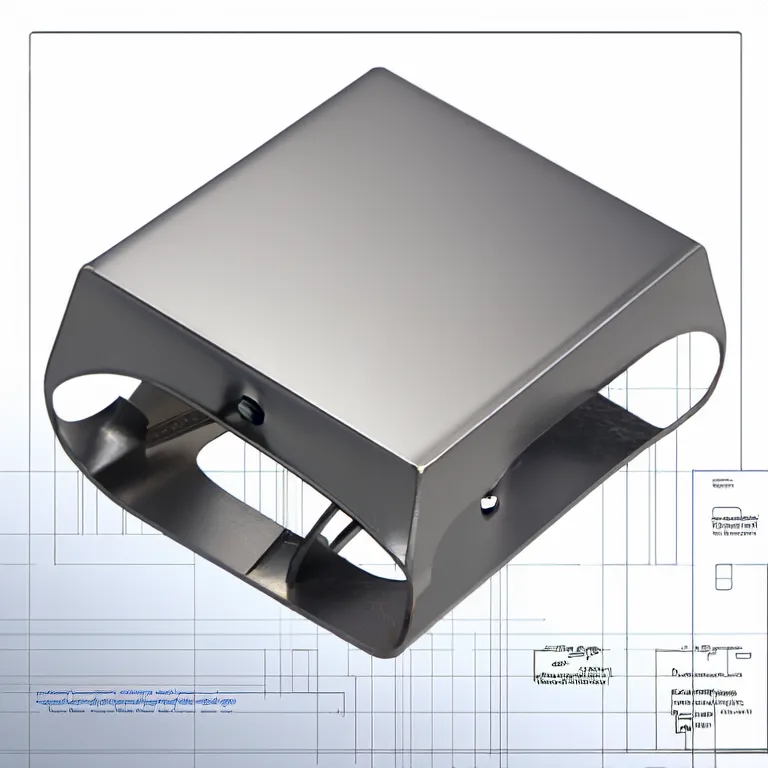
Aug. 10, 2026
Design Guidelines for Better Die Casting Results
Die casting is a widely-used manufacturing process in which molten metal is injected into a mold to create complex parts. To optimize outcomes, it is essential to adhere to specific design guidelines that enhance die casting results.
Read MoreSmall Molded Parts with in Days
Our complete CNC aluminum service will accompany your aluminum machining project from the prototype construction to the end aluminum parts manufacturing.
Get a Quote
Eight Processes

High-accuracy aluminum and zinc alloy parts produced with state-of-the-art die casting machines ranging from 88T to 2000T.
Read More
With machines from 88T to 2000T, we produce high-accuracy aluminum and zinc alloy parts efficiently.
Read More
Over 50 CNC machines, including 3-axis, 4-axis, and 5-axis, deliver precise and efficient machining for complex components.
Read More
A combination of manual and automated deburring techniques ensures smooth, defect-free surfaces for optimal performance.
Read More
Post-casting reshaping and alignment guarantee dimensional accuracy and structural integrity.
Read More
Comprehensive finishing solutions, including powder coating, spray painting, and UV coating, ensure superior durability and aesthetics.
Read More

Get in Touch
If you cannot find a suitable product, please leave a message or contact us. We have a dedicated technical team to serve you.