ISO 9001
ISO 14001
IATF16949
ISO 9001
ISO 14001
IATF16949
June 04, 2026
Die casting is a widely employed manufacturing process that allows for the production of intricate and durable metal components. The choice of materials plays a crucial role in determining the quality, strength, and application of the final product. In this article, we will explore the most common materials used in die casting processes, along with their properties and applications. By understanding these materials, manufacturers can better meet industry needs and address key pain points in production efficiency and product performance.
Aluminum alloys are among the most commonly used materials in die casting due to their lightweight nature and excellent corrosion resistance. These alloys provide good mechanical properties, making them suitable for various applications.
Zinc alloys are favored for their ease of casting and ability to produce intricate designs with high dimensional accuracy. These alloys offer exceptional strength and are often used in applications requiring excellent surface finish.
Magnesium alloys are utilized for their superior strength-to-weight ratio. They are particularly useful in applications where weight reduction is crucial, such as in the automotive industry.
Copper alloys, while less commonly used in die casting than aluminum and zinc, offer excellent electrical and thermal conductivity. They are ideal for components requiring high thermal performance.
Although less popular due to environmental concerns, lead alloys can be utilized in specific applications where density and corrosion resistance are required. They are often used in the production of weights and shields.
| Material | Density (g/cm³) | Corrosion Resistance | Strength (MPa) | Best Applications |
|---|---|---|---|---|
| Aluminum Alloys | 2.70 | Excellent | 300-400 | Automotive Parts, Electronics |
| Zinc Alloys | 6.50 | Good | 400-550 | Hardware, Telecommunications |
| Magnesium Alloys | 1.78 | Good | 200-300 | Aerospace, Automotive |
| Copper Alloys | 8.96 | Excellent | 250-400 | Electrical Components, Heat Sinks |
| Lead Alloys | 11.34 | Good | 40-100 | Weights, Shields |
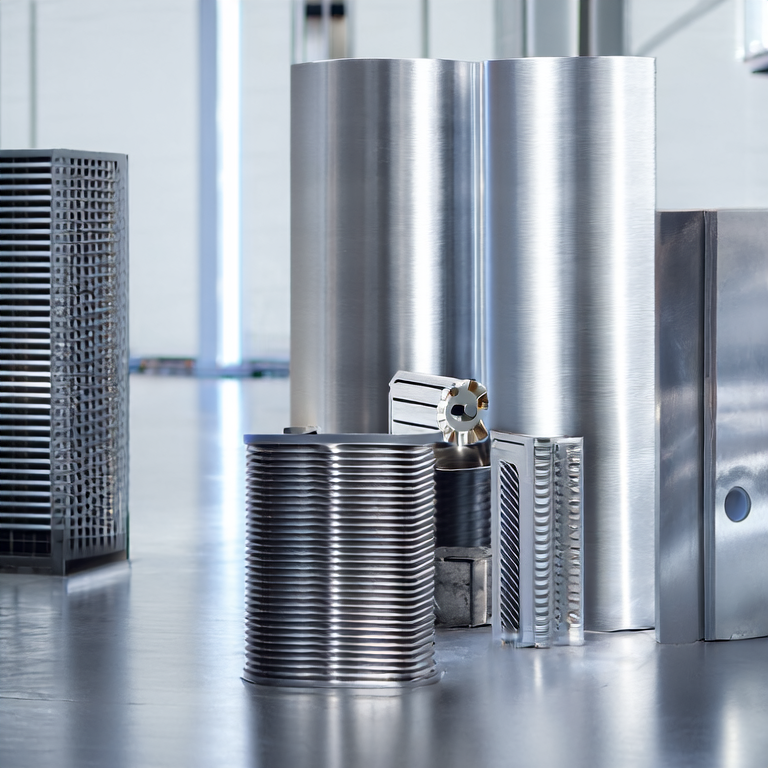
Understanding the die casting process is essential to grasp how these materials are worked with. The following flow chart outlines the typical steps involved in the die casting process:
In summary, the selection of the right material for die casting can significantly impact the performance and reliability of the final product. By understanding the properties and applications of common materials such as aluminum, zinc, magnesium, copper, and lead alloys, manufacturers can make informed decisions that align with their production goals. Yuhui is committed to delivering high-quality die casting solutions that meet our clients\' diverse needs in an evolving industry.
Latest News

Aug. 10, 2026
Quality Control in Die Casting: IATF 16949, ISO 9001 & Precision Inspection
Quality control in precision die casting combines the foundational process framework of ISO 9001 with the rigorous, defect-prevention mandates of IATF 16949.
Read More
Aug. 10, 2026
Design Guidelines for Better Die Casting Results
Die casting is a widely-used manufacturing process in which molten metal is injected into a mold to create complex parts. To optimize outcomes, it is essential to adhere to specific design guidelines that enhance die casting results.
Read MoreSmall Molded Parts with in Days
Our complete CNC aluminum service will accompany your aluminum machining project from the prototype construction to the end aluminum parts manufacturing.
Get a Quote
Eight Processes

High-accuracy aluminum and zinc alloy parts produced with state-of-the-art die casting machines ranging from 88T to 2000T.
Read More
With machines from 88T to 2000T, we produce high-accuracy aluminum and zinc alloy parts efficiently.
Read More
Over 50 CNC machines, including 3-axis, 4-axis, and 5-axis, deliver precise and efficient machining for complex components.
Read More
A combination of manual and automated deburring techniques ensures smooth, defect-free surfaces for optimal performance.
Read More
Post-casting reshaping and alignment guarantee dimensional accuracy and structural integrity.
Read More
Comprehensive finishing solutions, including powder coating, spray painting, and UV coating, ensure superior durability and aesthetics.
Read More

Get in Touch
If you cannot find a suitable product, please leave a message or contact us. We have a dedicated technical team to serve you.