ISO 9001
ISO 14001
IATF16949
ISO 9001
ISO 14001
IATF16949
February 14, 2026
Signal amplifiers are widely used in communication systems to strengthen weak signals and maintain stable transmission across long distances. Whether applied in telecom base stations, distributed antenna systems, or industrial communication networks, the enclosure of a signal amplifier plays a critical role in thermal management, structural protection, and electromagnetic shielding.
Aluminum die casting has become a preferred manufacturing method for signal amplifier enclosures due to its ability to deliver structural precision, efficient heat dissipation, and reliable outdoor durability.
Signal amplifier enclosures must meet several essential technical demands:
Protect internal RF modules, PCBs, and power components from dust, moisture, and mechanical impact
Provide effective heat dissipation for high-frequency and high-power operation
Offer electromagnetic shielding to minimize signal interference
Ensure accurate alignment for connectors, cable interfaces, and mounting points
Maintain stable sealing performance for outdoor installation
Since many amplifiers operate continuously and are often installed outdoors or in semi-exposed environments, enclosure reliability directly affects overall system performance.
Signal amplifiers generate concentrated heat. Die casting allows cooling fins, ribs, and heat dissipation structures to be integrated directly into the enclosure body, improving thermal efficiency without adding secondary components.
Precision die casting combined with CNC machining ensures accurate flatness on sealing surfaces, precise connector openings, and consistent mounting interfaces. This is critical for maintaining IP-rated protection and electrical performance.
Aluminum alloys provide natural conductivity, making them suitable for RF shielding applications. A well-designed die-cast enclosure helps reduce signal leakage and external interference.
Compared to steel housings, aluminum die-cast enclosures significantly reduce weight while maintaining mechanical strength. This is beneficial for wall-mounted or pole-mounted communication equipment.
The production of aluminum die-cast signal amplifier enclosures typically includes:
Tooling and Mold Design
Engineering teams optimize wall thickness, rib layout, and draft angles to balance casting quality and structural strength.
High-Pressure Die Casting (HPDC)
Molten aluminum is injected into precision molds under controlled pressure to achieve consistent structure and surface quality.
CNC Machining
Critical features such as threaded holes, connector ports, sealing grooves, and flat surfaces are machined to meet tolerance requirements.
Surface Treatment
Depending on installation environment:
Powder coating for corrosion resistance
Chromate conversion coating
Anodizing for enhanced durability
Custom finishing for outdoor exposure
Inspection and Testing
Dimensional checks, X-ray inspection for internal porosity, and sealing verification ensure reliability.

Material selection depends on strength, thermal performance, and casting complexity. Frequently used alloys include:
ADC12 / A380 – Good fluidity and cost-effective for complex shapes
AlSi10Mg – Improved mechanical properties and thermal conductivity
Customized alloys selected based on environmental resistance requirements
Choosing the right alloy helps ensure long-term stability under continuous operation.
When designing die-cast signal amplifier enclosures, manufacturers focus on:
Heat dissipation efficiency under continuous load
Porosity control to maintain structural integrity
Surface flatness for gasket compression
Corrosion resistance in humid or coastal areas
Consistent wall thickness to prevent warping
Precision tooling and controlled casting parameters are essential to achieving these performance standards.
Aluminum die-cast signal amplifier enclosures are widely used in:
Telecom base station signal boosters
Distributed antenna systems (DAS)
Indoor and outdoor RF repeaters
Industrial wireless communication systems
Smart infrastructure communication units
As network density increases and equipment becomes more compact, enclosure designs require higher integration and improved thermal management.
Signal amplifier projects often involve strict dimensional tolerances and thermal performance requirements. Early-stage engineering collaboration helps optimize structural design, reduce casting risks, and shorten development cycles.
A coordinated process that includes design review, prototype validation, mold development, and controlled mass production improves consistency and minimizes defects. You can learn more about our communication prototyping and manufacturing workflow to see how technical evaluation and production planning are integrated for communication components.
Aluminum die casting provides a reliable and efficient manufacturing solution for signal amplifier enclosures requiring thermal efficiency, electromagnetic shielding, and structural precision. By combining optimized mold design, controlled casting processes, precision machining, and suitable surface treatments, manufacturers can deliver enclosures capable of long-term operation in demanding communication environments.
As communication systems continue evolving toward higher frequency and higher power density, precision aluminum die casting remains a practical and scalable solution for advanced signal amplifier housing designs.
Latest News

Aug. 10, 2026
Quality Control in Die Casting: IATF 16949, ISO 9001 & Precision Inspection
Quality control in precision die casting combines the foundational process framework of ISO 9001 with the rigorous, defect-prevention mandates of IATF 16949.
Read More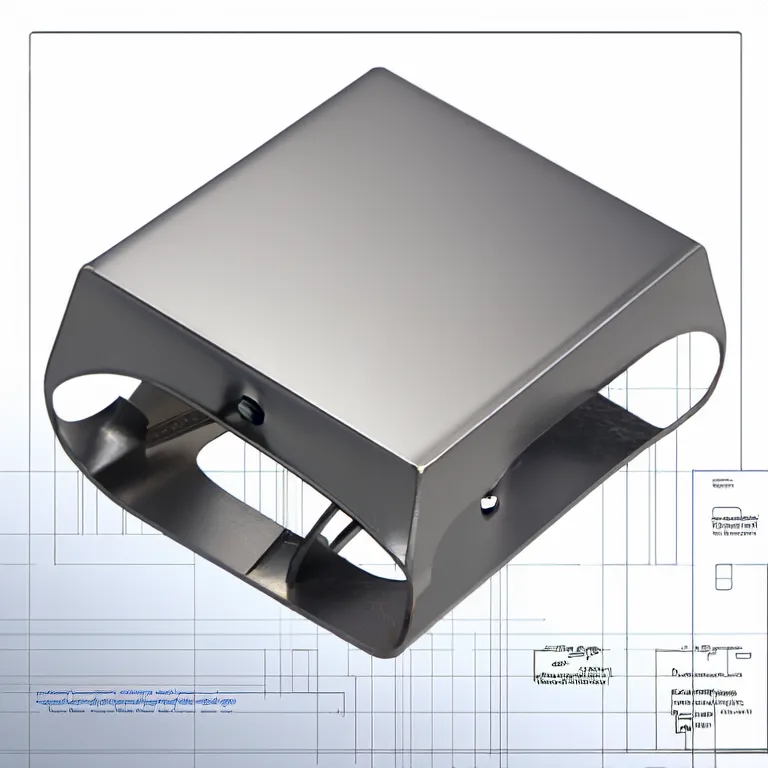
Aug. 10, 2026
Design Guidelines for Better Die Casting Results
Die casting is a widely-used manufacturing process in which molten metal is injected into a mold to create complex parts. To optimize outcomes, it is essential to adhere to specific design guidelines that enhance die casting results.
Read MoreSmall Molded Parts with in Days
Our complete CNC aluminum service will accompany your aluminum machining project from the prototype construction to the end aluminum parts manufacturing.
Get a Quote
Eight Processes

High-accuracy aluminum and zinc alloy parts produced with state-of-the-art die casting machines ranging from 88T to 2000T.
Read More
With machines from 88T to 2000T, we produce high-accuracy aluminum and zinc alloy parts efficiently.
Read More
Over 50 CNC machines, including 3-axis, 4-axis, and 5-axis, deliver precise and efficient machining for complex components.
Read More
A combination of manual and automated deburring techniques ensures smooth, defect-free surfaces for optimal performance.
Read More
Post-casting reshaping and alignment guarantee dimensional accuracy and structural integrity.
Read More
Comprehensive finishing solutions, including powder coating, spray painting, and UV coating, ensure superior durability and aesthetics.
Read More

Get in Touch
If you cannot find a suitable product, please leave a message or contact us. We have a dedicated technical team to serve you.